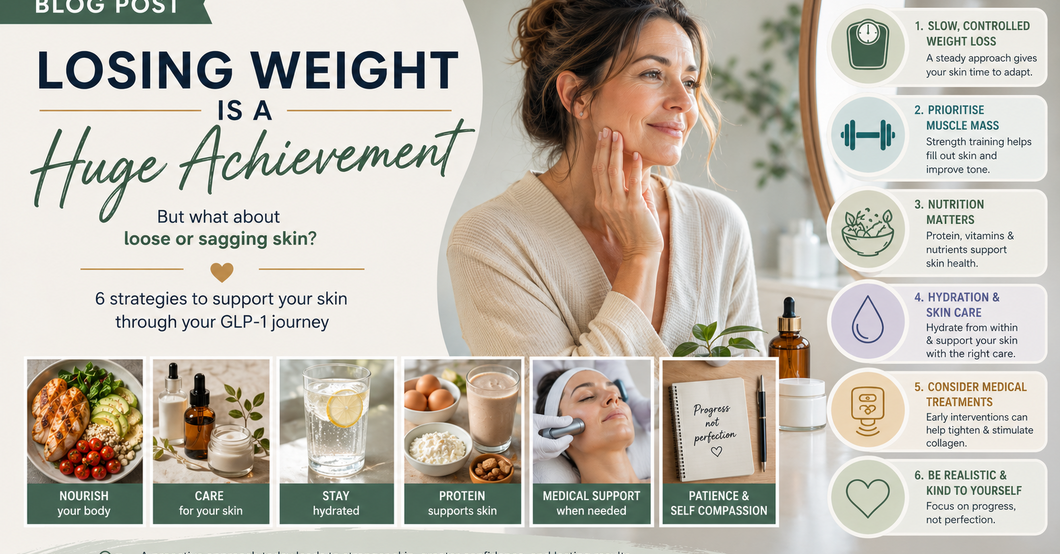
Losing weight is a huge achievement — but for many patients, it comes with an unexpected concern: loose or sagging skin.
First, it’s important to normalise this. Skin elasticity varies from person to person and is influenced by factors like age, genetics, how quickly the weight was lost, and overall skin quality. So if you’re noticing changes, you’re not alone — and there are ways to manage it.
The key principle is this: prevention and early intervention matter more than trying to fix things later.
1. Slow, controlled weight loss is your ally
Rapid weight loss doesn’t give your skin enough time to adapt. Where possible, a steady and medically guided approach allows the skin to gradually contract alongside your changing body composition.
2. Prioritise muscle mass
Resistance training is one of the most effective ways to reduce the appearance of loose skin. By building underlying muscle, you’re essentially “filling out” the skin and improving overall tone. Even simple strength training 2–3 times per week can make a noticeable difference.
3. Nutrition plays a bigger role than most people realise
Skin health relies heavily on adequate protein intake, as well as key nutrients like vitamin C, zinc, and collagen-supporting compounds. If your diet is overly restrictive, your skin is often the first place it shows.
4. Hydration and skin care
Well-hydrated skin appears more elastic and resilient. Alongside drinking enough water, using medical-grade skincare (particularly those supporting collagen production) can help maintain skin quality during weight loss.
5. Consider medical treatments where appropriate
For patients with moderate concerns, treatments such as radiofrequency, ultrasound-based tightening, or collagen-stimulating injectables can support skin tightening. These work best when introduced early rather than waiting until laxity is severe.
6. Be realistic — and kind to yourself
Some degree of skin change is completely natural, especially after significant weight loss. The goal isn’t perfection — it’s optimisation. In cases of more significant laxity, surgical options can be discussed, but this is usually a later-stage consideration.
Ultimately, managing loose skin is about taking a proactive, holistic approach — combining lifestyle, nutrition, and where needed, medical support.
If you’re unsure what’s right for you, this is exactly the kind of conversation we guide you through during your consultation.